


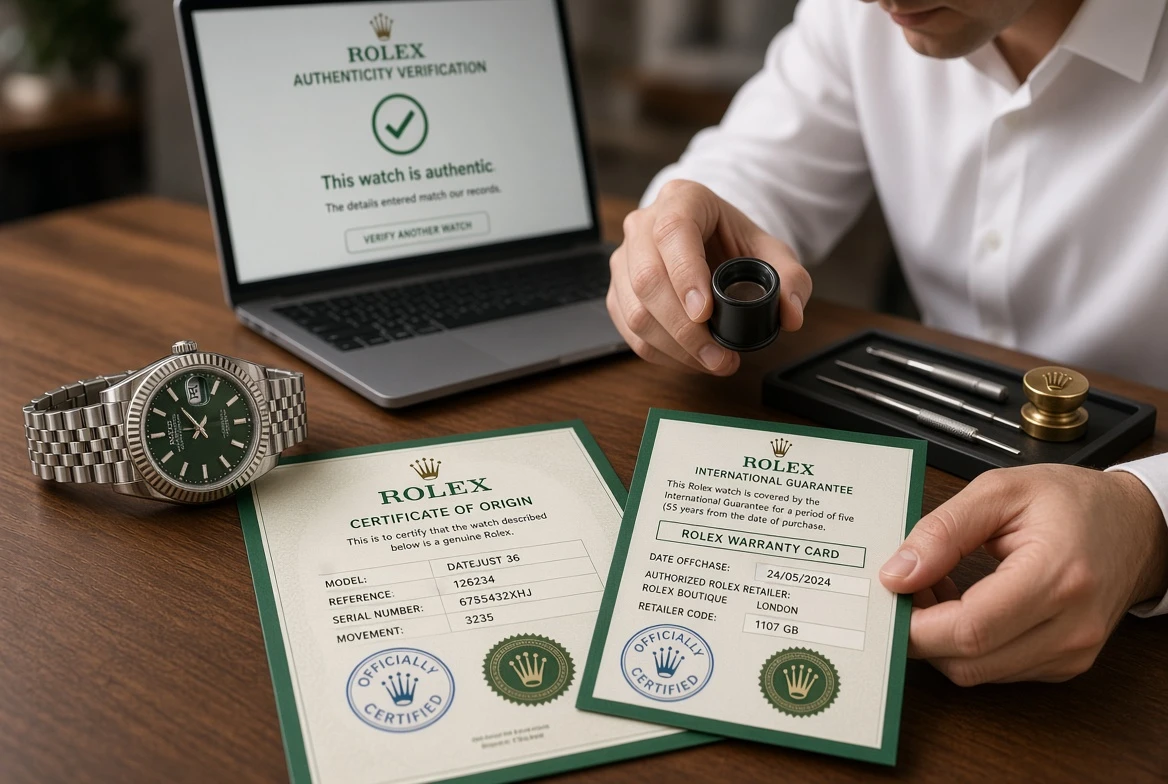
When people compare luxury watches, warranty length is usually one of the first numbers they look at. The comparison can mislead, though. A five-year guarantee from a manufacturer and a one-year warranty from a dealer are different things, and putting them side by side is like comparing apples and oranges. This guide covers who stands behind each type, what is and isn’t covered, and what to ask before you buy.
Manufacturer Warranties: Five Years on New Watches
Rolex is the clearest example. Since 2015, it has offered a five-year international guarantee on new watches bought from an Official Retailer, up from two years before. Rolex itself issues and backs the guarantee, not the retailer. It is valid only if the watch was sold by an Official Retailer, the guarantee card was filled in completely at purchase, and the card is presented with the watch for any claim.
Other brands have moved the same way. Chanel, for example, offers five years on watches bought from October 2022. Across the industry, factory coverage has been creeping up from two years toward five.
Here is the catch: the guarantee belongs to the watch’s first sale as a new piece, not to whoever owns it later. On the pre-owned market, whether any factory coverage remains depends on the original purchase date. That is why the date on the warranty card matters so much when you research a specific watch.
Dealer Warranties on Pre-Owned Watches
After the first owner, a different kind of warranty takes over. It comes from the dealer selling the watch, not from the brand, and it varies a lot from seller to seller. Many established pre-owned dealers offer one year as their standard in-house coverage on modern watches once any factory warranty has run out.
Some go further. A few retailers advertise two years on all pre-owned pieces and present it as a selling point above the one-year norm. Either way, dealer warranties usually cover mechanical movement faults and functional defects that weren’t caused by misuse. Cosmetic wear, strap damage and water damage beyond the rated resistance are normally excluded, whoever issues the coverage.
Questions to Ask Before You Buy
The headline number tells you little about how well you’re protected. Three questions tell you more.
Who stands behind it? A remaining factory warranty is honored through the brand’s own authorized service network. A dealer warranty is only as good as that dealer’s service capability and, in the end, whether the business is still around when you need it.
What counts as a claim, and what’s excluded? Nearly every warranty leaves out normal wear, accidental damage, and unauthorized repairs. The real differences are in how each one defines and handles movement faults and functional defects. Read that section closely.
Is there a separate return window? A warranty deals with faults that show up after the sale. A return policy deals with a watch that doesn’t match its description or arrives with a problem that wasn’t disclosed. They protect you in different ways, and for a first-time buyer, a good two-week return window can matter as much as the warranty length.
How WatchOyster Handles Coverage
Every watch at WatchOyster comes with a 12-month WATCHOYSTER warranty. It covers mechanical movement malfunctions and functional defects not caused by misuse, and it sits alongside any statutory rights under Swiss law. You can see the full range for Buy Men’s watch/Unisex Watches and Buy Women’s watch in the catalog.
The warranty is backed by work done before a watch is listed. A certified watchmaker inspects each piece in the company’s own workshop, and the serial number is checked against The Watch Register. That way, you don’t depend on the warranty alone to catch problems after the fact.
Returns are a separate protection. WatchOyster accepts them within 14 days of delivery if the watch differs materially from its listing or has an undisclosed defect.
The Short Version
A “5-year warranty” almost always means a manufacturer’s guarantee on a new watch. It does not describe pre-owned dealer coverage, so if a listing blurs the two, look closer. On the pre-owned market, one year is a common baseline and two years is offered by some dealers as a bonus. More useful than the number itself is knowing who backs the coverage, what it excludes, and whether the watch was properly inspected before it was sold to you.

