


The way people choose and visit restaurants has changed significantly. Guests increasingly use smartphones to discover restaurants, check menus, compare opening hours, read reviews, and make reservations. Because of this shift, restaurants need to make the booking process as convenient as the dining experience itself.
An online table reservation system gives restaurants a practical way to accept bookings digitally while keeping information about tables, guests, and availability organized. Instead of depending entirely on phone calls, handwritten reservation books, or messages across several social media platforms, restaurants can centralize reservations and make availability easier to manage.
For restaurants looking to understand how digital booking technology can fit into everyday operations, https://restaurant.reservble.com/ demonstrates how online reservations can be connected with table management and other restaurant processes.
Why Online Table Reservations Have Become Important
Restaurant customers value convenience. When someone decides to have dinner at a particular time, they usually want to know whether a table is available without having to make several phone calls or wait for a response to a social media message.
Online booking addresses this expectation by allowing guests to make reservations digitally. Depending on the system, they can select a date, time, party size, dining area, and sometimes even a specific table. The reservation can then be confirmed automatically and added to the restaurant’s booking schedule.
For restaurant operators, this creates a more structured process. Instead of receiving bookings through multiple disconnected channels, the team can work with a centralized overview of reservations and table availability.
The Difference Between Manual and Digital Booking
Traditional reservation management often relies on a combination of telephone calls, notebooks, spreadsheets, emails, and social media messages. This approach may be manageable for a small restaurant with limited booking activity, but it becomes increasingly difficult as the number of reservations grows.
Manual systems also depend heavily on employees remembering to update information. A change made during a busy service can potentially be overlooked, resulting in incorrect availability or conflicting reservations.
A digital reservation platform can reduce this administrative burden by keeping booking information in one environment and updating availability as reservations are created or changed.
How an Online Reservation System Works
The basic process is straightforward. A guest visits a restaurant’s website or another supported booking channel and opens the reservation interface. The guest chooses the preferred date, time, and number of people.
The system checks the restaurant’s configured availability and presents the options that can accommodate the requested party. After the guest completes the booking, the reservation appears in the restaurant’s management interface.
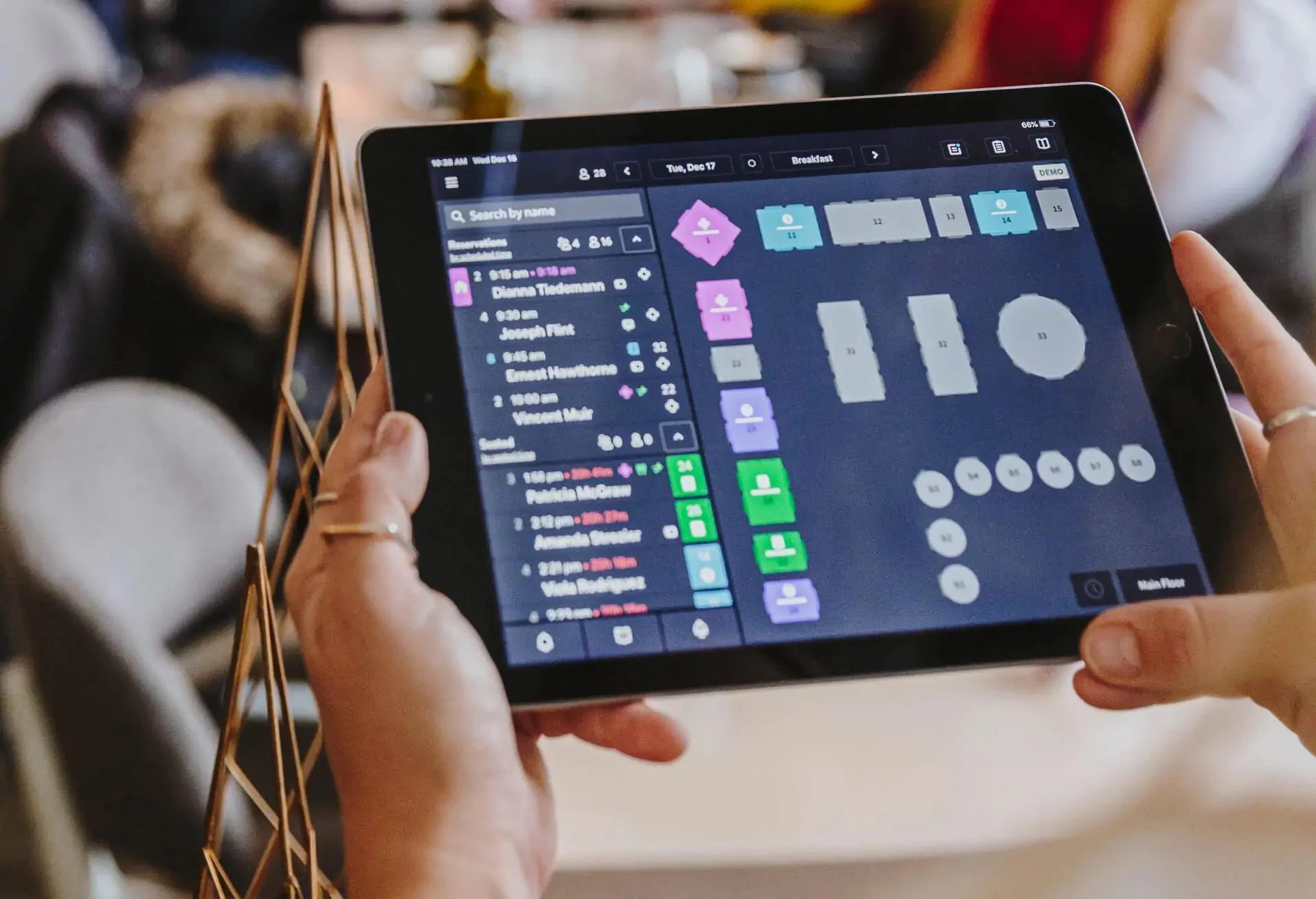
Modern systems can go further than simply recording the reservation. They may connect bookings with a visual floor plan, automatically assign tables, support waitlists, send confirmations and reminders, and integrate reservation information with a point-of-sale system.
From Booking to Arrival
The reservation process does not have to end when the customer receives a confirmation. During the actual visit, the restaurant can update the reservation status when the guest arrives and continue tracking the table through the service.
For example, Reservble describes a workflow in which reservations from a website, Google, and Instagram can feed into a live floor plan. Hosts can then manage arrivals, walk-ins, and waitlists from the same environment.
Benefits for Restaurant Guests
The most obvious advantage of online booking is convenience. Guests can make reservations without calling the restaurant during business hours and without waiting for a member of staff to respond.
This is particularly useful when customers make plans outside traditional opening hours. Someone can decide late in the evening that they want to visit a restaurant the following day and make a reservation immediately if online booking is available.
24/7 Booking Availability
A restaurant may only have staff available for telephone reservations during certain hours. An online reservation page, however, can accept bookings around the clock. This creates an additional opportunity to capture reservations that might otherwise be lost.
For customers, the benefit is equally clear. They do not need to remember to call the restaurant the next morning or wait until someone is available to answer the phone.
Real-Time Availability
When availability is connected to the restaurant’s reservation management system, guests can select from current time slots instead of sending a request and waiting for confirmation.
Real-time availability can also make the booking experience more transparent. If a particular time is unavailable, customers can choose another option rather than assuming that the restaurant has ignored their request.
Less Communication Back and Forth
Phone calls and social media messages can require several exchanges. A customer may ask about availability, receive an alternative time, ask about another date, and then confirm the final option.
An online booking flow can reduce these interactions by allowing the guest to see available options and make the decision independently.
Improving Table Management
Reservations are closely connected with table management. A restaurant does not simply need to know how many guests are coming. It also needs to know where those guests can be seated and how the dining room will look at different times during service.
A modern reservation platform can represent the restaurant’s layout digitally. Tables can be organized by rooms, zones, capacity, or other characteristics. This gives staff a visual understanding of the dining room instead of relying only on a chronological list of reservations.
For example, a table for two should not necessarily be assigned to a group of eight, while combining several tables may be appropriate for a larger party. A structured floor plan allows the restaurant to make these decisions more systematically.
Preventing Double Bookings
One of the key operational problems with manual reservations is the risk of double booking. If two employees record reservations independently, the same table can potentially be promised to different guests.
A centralized system can reduce this risk by using one source of reservation information. When availability changes, the booking calendar and floor plan can reflect the updated status.
This is particularly important during peak service periods when reservations can arrive quickly and staff have limited time to check several different records.
Managing Walk-In Guests and Waitlists
Not every customer will make a reservation. Walk-in guests remain an important part of restaurant business, particularly in locations with significant foot traffic.
A reservation system should therefore not be viewed as a replacement for walk-in management. Instead, it can help restaurant teams combine both types of demand.
When all reserved tables and their expected arrival times are visible, staff can make better decisions about which tables may be temporarily available for walk-in customers.
Why a Digital Waitlist Is Useful
A waitlist allows restaurants to capture demand even when all tables are currently occupied. Instead of simply telling a guest that there are no available tables, staff can record the customer’s details and contact them when a suitable table becomes available.
Digital waitlists can also provide more structure during busy services. Reservble, for example, describes waitlist functionality that allows staff to manage guests alongside reservations and walk-ins from the restaurant’s floor plan.
This can help restaurants make better use of cancellations and unexpectedly available tables.
Reducing the Impact of No-Shows
No-shows are a common operational challenge for restaurants. A table may be reserved for a particular time, but the guest may not arrive. During a busy evening, keeping that table unavailable can mean losing an opportunity to serve another customer.
Digital reservation systems can provide tools that help restaurants manage this risk. Automated reminders can encourage guests to remember their bookings, while deposits or prepayments can be used for selected services or high-demand periods.
For example, Reservble provides configurable deposits and prepayments and describes automated reminders as part of its reservation workflow.
Clear Cancellation Policies
A clear cancellation policy is another important element of reservation management. Guests should understand whether they can cancel a booking, how much notice is required, and whether a deposit will be refunded.
From the restaurant’s perspective, a transparent policy makes it easier to manage high-demand periods. From the guest’s perspective, clear information prevents unpleasant surprises.
Using Reservation Data for Better Decisions
One of the biggest differences between a simple booking calendar and a modern reservation platform is the amount of information that can be generated from reservations.
Restaurants can analyze when bookings are made, which channels generate reservations, which periods have the highest demand, how many guests arrive, and how frequently customers return.
This information can support operational and marketing decisions. Instead of relying entirely on assumptions, restaurant managers can examine actual booking patterns.
Understanding Peak Periods
If reservations consistently increase on Friday evenings, the restaurant can prepare staffing and table availability accordingly. If certain weekday periods remain quiet, management can consider whether promotions or special events could help increase demand.
The objective is not simply to collect data but to use it to understand how the restaurant operates throughout different services.
Tracking Booking Sources
Customers may discover a restaurant through its website, Google, Instagram, Facebook, advertising campaigns, or other channels. If reservations are tracked by source, restaurant owners can better understand which channels generate actual bookings rather than only views or clicks.
Reservble’s current platform describes channel attribution for sources such as websites, Google, Instagram, Facebook, campaigns, and advertising, allowing restaurant teams to connect reservations with marketing activity.
Connecting Reservations With Other Restaurant Systems
Reservation management becomes even more useful when it is connected with other restaurant technologies. Restaurants often use point-of-sale systems, payment solutions, customer databases, accounting tools, and marketing platforms.
Without integration, employees may have to enter the same information into several systems. This creates additional work and increases the possibility of inconsistencies.
Integration can help create a more connected workflow. For example, reservation and seating information can be synchronized with a POS system, allowing restaurant employees to work with more consistent information during service.
Reservble states that its platform can operate with POS integrations or as a standalone system and supports synchronization between reservations, seating, orders, payments, and related data.
Why Integration Matters for Staff
Restaurant employees work in a fast-moving environment. During a busy service, staff should not have to spend unnecessary time switching between several platforms just to determine whether a guest has arrived or which table is available.
Connected systems can reduce repetitive data entry and make information easier to access. This allows employees to focus more attention on guests and service.
Mobile-Friendly Booking Is Essential
Restaurants should also consider how customers access their booking pages. Many people discover restaurants while using a smartphone, so the reservation interface needs to work effectively on mobile devices.
A mobile-friendly booking process should make it easy to select a date, choose a time, enter the number of guests, and confirm the reservation without unnecessary steps.
If the process is difficult to use on a phone, potential customers may abandon it before completing the booking.
Features of a Convenient Mobile Booking Experience
- Simple date and time selection
- Clear indication of available options
- Easy party-size selection
- Minimal required information
- Fast confirmation
- Clear cancellation conditions
- Responsive design for different screen sizes
How Online Reservations Can Support Restaurant Marketing
A reservation system can also play a role in restaurant marketing. A booking is a stronger indicator of customer intent than simply viewing a social media post or visiting a website.
When reservation sources are tracked, restaurant owners can understand which marketing activities generate actual dining visits. This can make marketing analysis more practical.
For example, a restaurant may promote a special menu through social media. If the booking system records how many reservations originated from that campaign, management can compare the campaign with other acquisition channels.
From Website Visitor to Restaurant Guest
The restaurant website is often one of the most important places where a potential customer decides whether to visit. Menu information, photographs, location, opening hours, reviews, and reservation options can all influence the decision.
Placing a booking function directly on the website reduces the distance between discovering a restaurant and making a reservation. A guest does not necessarily need to leave the restaurant’s website and search for another platform.
Choosing an Online Table Reservation System
Restaurant owners should evaluate reservation software according to the actual needs of their business. A small café, a high-volume restaurant, and a multi-location restaurant group may have very different requirements.
The most important question is not how many features a platform has, but whether its features solve real operational problems.
Important Features to Consider
- Online booking through the restaurant website
- Real-time table availability
- Centralized reservation management
- Visual floor plan
- Table and zone management
- Automatic confirmations and reminders
- Waitlist functionality
- Cancellation management
- Deposits and prepayments
- POS integration
- Reservation analytics
- Channel attribution
- Support for multiple restaurant locations
Restaurants should also consider ease of use. A sophisticated system is only useful if employees can understand it and use it efficiently during a busy service.
Making the Booking Process Easier for Customers
The goal of an online reservation system should be to remove unnecessary friction. Customers should not have to complete a long form or search through complicated menus simply to reserve a table.
The most important information should be immediately visible. Guests should understand what dates and times are available, how many people can be accommodated, and what happens after they complete the booking.
Clear confirmation messages are also important. After making a reservation, the guest should know that the booking has been successfully registered and should have access to the relevant details.
Communication Before the Visit
Good communication does not end after the booking confirmation. Reminders can help guests remember their reservations, while information about changes or cancellations can keep both sides informed.
For restaurants, this can reduce the amount of manual communication required by staff. For customers, it creates a more predictable experience.
The Future of Restaurant Reservation Management
Restaurant reservation technology continues to evolve alongside other hospitality tools. Booking systems are becoming increasingly connected with table management, POS systems, payments, guest profiles, marketing analytics, and customer communication.
This development means that reservations are no longer simply entries in a calendar. They can become a source of operational information that helps restaurants understand demand and improve the way their dining rooms function.
At the same time, the basic customer expectation remains simple: guests want to know whether they can get a table and reserve it without unnecessary effort.
Conclusion
An online reservation process can benefit both sides of the restaurant experience. Guests gain a convenient way to check availability and secure a table, while restaurants gain better control over reservations, seating, waitlists, and customer communication.
Modern reservation platforms can go beyond basic booking. They can connect reservations with live floor plans, automated confirmations, reminders, deposits, POS systems, and analytics. These functions can help restaurants organize their operations and understand how customers interact with different booking channels. :contentReference[oaicite:10]{index=10}
For restaurant owners, the key is to choose technology that fits the way their business actually operates. A useful system should make reservations easier for guests while reducing unnecessary administrative work for staff.

