



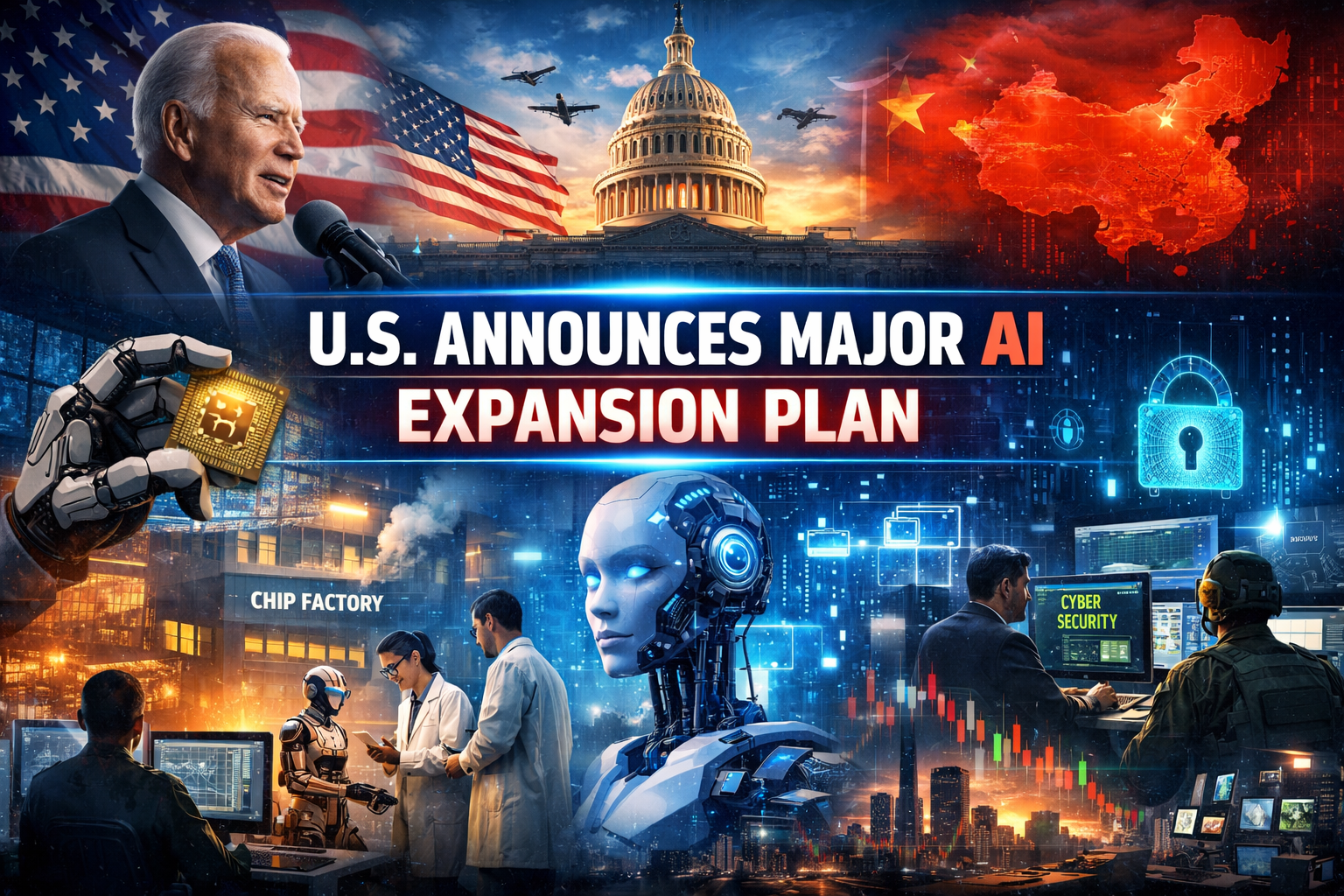
The United States has entered a bold new chapter in its technological journey. With the announcement of a major national Artificial Intelligence expansion plan, Washington has made it clear that AI is no longer just a Silicon Valley innovation trend — it is now a strategic national priority. This sweeping initiative signals a turning point not only for the American economy but also for global technological leadership in the decades ahead.
At the center of this moment stands the U.S. government’s commitment to strengthening AI infrastructure, expanding semiconductor manufacturing, investing in research and development, and building a highly skilled workforce prepared for the digital age. The announcement reflects a growing recognition that Artificial Intelligence will shape everything from economic growth and job creation to national defense and global diplomacy.
A National Strategy Built on Innovation
Artificial Intelligence has been evolving rapidly over the past decade. From machine learning systems that analyze massive datasets to generative AI tools capable of producing text, images, and code, the technology is transforming industries at an unprecedented pace. However, as AI’s influence expands, so do the stakes.
The new expansion plan aims to accelerate domestic innovation while ensuring that AI development aligns with American values, including transparency, security, and accountability. By channeling billions of dollars into AI research centers, supercomputing facilities, and advanced semiconductor production, the government intends to strengthen the nation’s technological backbone.
Semiconductors, often referred to as the “brains” of modern electronics, are essential for AI systems. The plan emphasizes reducing reliance on foreign supply chains and boosting domestic chip production. By investing in advanced manufacturing plants across multiple states, the United States hopes to secure a steady and reliable supply of cutting-edge chips that power everything from smartphones to defense systems.
Economic Growth and the AI Boom
The economic implications of this expansion are enormous. Analysts predict that Artificial Intelligence could contribute trillions of dollars to the U.S. economy over the next decade. AI-driven automation, predictive analytics, and advanced robotics are already reshaping sectors such as healthcare, finance, transportation, retail, and manufacturing.
In healthcare, AI tools can detect diseases earlier, personalize treatment plans, and improve patient outcomes. In finance, algorithms analyze market trends and manage risk more efficiently. In manufacturing, smart robotics enhances productivity and reduces costs. These advancements not only increase efficiency but also create entirely new industries and business models.
At the same time, the plan acknowledges the potential disruption AI may cause. Automation could replace certain repetitive or routine jobs, raising concerns about workforce displacement. To address this, the expansion strategy includes funding for education and training programs that prepare workers for emerging AI-related careers. Upskilling initiatives aim to equip Americans with the knowledge needed to thrive in fields such as data science, cybersecurity, machine learning engineering, and AI ethics.
Workforce Development: Preparing for the Future
A key pillar of the initiative focuses on education and workforce development. Universities and research institutions are expected to receive grants to expand AI-focused programs. Partnerships between the public and private sectors will encourage internships, apprenticeships, and training programs that bridge the gap between academia and industry.
Community colleges and vocational training centers will also play an important role. By offering accessible certification programs and technical training, these institutions can help workers transition into high-demand technology roles. The government’s vision emphasizes inclusivity, aiming to ensure that opportunities in AI are available to people from diverse backgrounds and regions.
This nationwide effort is designed not only to maintain America’s competitive edge but also to promote equitable growth. By investing in human capital, the plan seeks to prevent the digital divide from widening and to ensure that AI-driven prosperity reaches communities across the country.
Strengthening National Security
Beyond economic growth, Artificial Intelligence is increasingly seen as a matter of national security. AI systems can enhance cybersecurity defenses, detect threats in real time, and improve intelligence analysis. Advanced algorithms are capable of processing vast amounts of data, identifying patterns that might otherwise go unnoticed.
The expansion plan includes measures to integrate AI into defense systems responsibly. From autonomous drones to predictive maintenance for military equipment, AI applications have the potential to increase efficiency and effectiveness. However, officials have emphasized the importance of maintaining human oversight and ethical guidelines in military AI development.
Cybersecurity is another critical focus. As AI becomes more advanced, so do cyber threats. Malicious actors may use AI to launch sophisticated attacks, generate convincing deepfakes, or exploit vulnerabilities in digital infrastructure. Strengthening cybersecurity frameworks and developing AI-driven defense tools are central components of the national strategy.
Responsible AI and Regulatory Oversight
While innovation is a priority, policymakers are equally concerned about the ethical implications of Artificial Intelligence. Issues such as data privacy, bias in algorithms, misinformation, and job displacement require thoughtful oversight.
The expansion plan outlines a framework for responsible AI governance. Lawmakers are exploring guidelines that promote transparency in AI systems, protect consumer data, and prevent misuse. Collaboration between federal agencies, technology companies, and academic researchers is expected to play a key role in shaping these standards.
Public trust will be essential for AI adoption. By establishing clear rules and ethical principles, the government aims to ensure that AI technologies benefit society while minimizing risks. Transparency in how AI systems are developed and deployed will help build confidence among citizens and businesses alike.
The Global AI Race
The announcement also reflects intensifying global competition. Countries around the world are investing heavily in Artificial Intelligence, recognizing its strategic importance. The United States views AI leadership as crucial to maintaining its influence on the global stage.
The expansion plan signals that America intends to remain at the forefront of technological innovation. By strengthening domestic capabilities, fostering international partnerships, and promoting democratic values in AI governance, the U.S. aims to shape global standards and norms.
This competitive environment has been described by some experts as a modern “technology race,” where breakthroughs in AI could redefine economic power and geopolitical influence. The United States’ renewed commitment underscores the urgency of staying ahead in this rapidly evolving landscape.
Industry Collaboration and Private Sector Role
The private sector will be instrumental in executing the AI expansion plan. Technology companies, startups, and research labs are already driving innovation. Public-private partnerships are expected to accelerate progress by combining government support with industry expertise.
Startups may receive funding and incentives to develop cutting-edge AI applications, while established companies can collaborate on large-scale infrastructure projects. This synergy between government and industry is designed to maximize efficiency and foster innovation.
Entrepreneurs and investors are closely watching the initiative. Increased funding and policy clarity could stimulate venture capital activity, encouraging the growth of new AI-focused enterprises across the country.
Transforming Everyday Life
Beyond economics and national security, Artificial Intelligence is poised to transform everyday life for millions of Americans. Smart assistants, personalized recommendations, autonomous vehicles, and intelligent healthcare solutions are becoming increasingly common.
In education, AI-powered platforms can tailor lessons to individual students’ learning styles. In agriculture, predictive analytics help farmers optimize crop yields. In urban planning, smart city technologies enhance energy efficiency and reduce traffic congestion.
The expansion plan envisions a future where AI enhances productivity and improves the quality of life. However, achieving this vision requires careful planning, collaboration, and continuous evaluation.
Challenges and Opportunities Ahead
Despite the optimism surrounding AI expansion, challenges remain. Balancing innovation with regulation is complex. Ensuring equitable access to opportunities requires sustained effort. Addressing ethical concerns demands transparency and accountability.
Nevertheless, the opportunities far outweigh the obstacles. Artificial Intelligence has the potential to solve some of society’s most pressing problems, from climate change modeling to medical research breakthroughs.
By committing to a comprehensive national strategy, the United States is positioning itself to harness AI’s transformative power responsibly and effectively.
A Defining Moment for America
The announcement of a major AI expansion plan represents more than just a policy decision. It marks a defining moment in America’s technological evolution. With bold investments in infrastructure, education, research, and security, the nation is laying the groundwork for long-term leadership in Artificial Intelligence.
As AI continues to shape the 21st century, the choices made today will influence generations to come. The United States has signaled its intent to lead — not only in innovation but also in responsibility and ethical governance.
This ambitious initiative reflects confidence in the country’s ability to adapt, innovate, and compete on the global stage. The coming years will reveal how effectively the plan translates into tangible progress. But one thing is certain: Artificial Intelligence is now central to America’s economic strength, national security, and future prosperity.